
Zeese Papanikolas, Author, Educator: An Interview
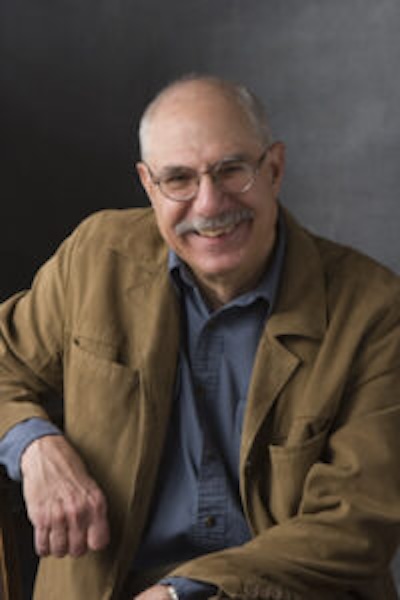
Readers of Ergon would be familiar with Zeese Papanikolas, whose pioneering book Buried Unsung, his biography of Louis Tikas, the Greek immigrant labor organizer killed in the Colorado Coal strike of 1913-14, left an indelible mark in American labor and transnational Greek American studies as well as broadly in the United States, Greece, and elsewhere. Nine years since his personal essay “Confessions of a Hyphenated Greek” we are delighted to once again feature Zeese Papanikolas’s insights, this time in a conversation regarding his life as writer and teacher, his books and ongoing projects, his thoughts on America, Greek America, the immigrant past and the diasporic present, modern Greek studies in the context of contact zones.
Interview (Questions by Yiorgos Anagnostou)
Dear Zeese Papanikolas, welcome to Ergon! I would like to start with the question of writing—you have led a writer’s life. What motivates this commitment? What did writing mean to you early in your life and what does it mean today?
One of my earliest experiences was following my mother around as she did her housework and listened to a radio show called Invitation to Learning, where a panel of intellectuals talked about great books of the past. It was all very middlebrow, but for my mother, a frustrated writer with a demanding family it was like a breathing tube let down to someone buried in a mine cave-in. For me, those far off voices on the radio speaking of untranslatable things that diverted her attention from me were like gods. So, of course, I wanted to learn that mysterious language. Later on I loved to read and it was natural that I wanted to write.
I can’t ascribe my primary motive in writing to any particularly noble desire. For me it comes down to a kind of primitive magic. If you can name something, you have it in your power. The world itself, our histories, our relationships to others, our inner complexities, are riddles. Giving a name to the fleeting impressions of the world, the light shining through the aspen trees, or the particular way an old coal miner tells a story, or the words lovers use in a quarrel, is something worth striving for, and momentarily changes our isolation from the world.
America, as a country but also an idea or experiment, as you have put it, appears to preoccupy your writing projects. What does America mean to you? Would you share a couple of formative moments in this relationship?
My research and writing of Buried Unsung was the most formative moment in my attempt to understand America. I’ll write more about that below.
You have written several books exploring various facets of American history and culture. What questions are you asking? Help us understand some key contours in the literary journey of engaging with America.
I write usually out of curiosity or irritation and sometimes anger about this country. Emerson said America “has no past.” What he was talking about was an attitude. Everything here is claimed to be a beginning, a new opportunity. This country was seen by the first Europeans who set foot on it as a blank slate on which to write their destinies. It sprouted utopian colonies and new religions like mushrooms after a rain, and still does. What other country has never had a king? Just listen to the rhetoric about Artificial Intelligence and you can hear the voice of the conquest of the future. I’m always amazed by the remarkable cultural innovations of this country—jazz and the blues, the hybrid sounds of country western music and rock and roll. But under this country’s possibilities are our original sins, the dispossession of the native American’s lands and the crime of slavery. These are still with us, still working through our economic and social disparities and corrupting our politics. A lot of my writing is an attempt to understand these paradoxes.
You taught at Stanford University and Sonoma State College, and you were a long-time member of the Humanities Department of the San Francisco Art Institute. What did teaching mean to you? What is your favorite approach for fostering student critical thinking?
I grew up under the New Criticism, which demanded close reading of the text at the expense of the historical context in which it took shape. If there hadn’t been a turn to examining the historical context of a piece of writing, the Vietnam War would have forced my generation into looking at the politics of composition. What I liked to do as a teacher was to guide the students to use their own experience and that of their generation to try to imagine themselves into a text. The traumatic memories recounted by psychiatric patients in a Veterans Administration in Boston in Achilles in Vietnam taught me more about the Iliad than most of the books I’ve read about the poem and its archaic world.
I would like to turn to your Greek/American writings. You often place the immigrant past and working-class issues at the center of inquiry. What motivates this focus?
Anger.
I recently reread your article/poetic essay “For a Greek Bootblack” (1994) and was taken by the power of your prose. You are writing as a historian as well as a poet, something rare in Greek American studies. I am interested in the literary investment in your narration of history.
I began to write fiction in college and what I learned from that formed the way I tried to capture the past and whatever ideas I had about American labor and immigrant life.
My biography of Louis Tikas, Buried Unsung actually began as a novel. But I soon learned that the hole this immigrant Greek labor organizer left in history was a more interesting topic than any fictional contrivances I could make that would fill in the scant details I could find out about his life. To create a sense of Tikas, I had to surround his absence with the presence of the men and women around him and the history he was part of, and to hold the book I was writing together I relied on very old literary traditions, the quest—that is, my own quest to find out what I could about this missing hero and even a few other tropes as well, the meeting of the Muse of History in the guise of a young prostitute coming out of a Denver bar, the descent into the Underworld that became my visit to a Denver mortuary where records of Tikas’ burial were stored, and the moirológia—the ancient lament for the dead.
You are the author of “Buried Unsung: Louis Tikas and The Ludlow Massacre” (1982), a pioneering work in a variety of ways. The book has “travelled” in multiple directions, inspiring documentaries, art, poetry, translation, scholarship. Almost forty-five years later, is there something vital about this topic that has not entered public conversation? I wonder too about your feelings and thoughts about this life-defining work and its significance today.
Yes, writing and researching Buried Unsung was life-defining for me, because of the old people I interviewed who knew Tikas and had memories of the 1913-14 strike. They put me in intimate touch with the militant workers of the early 20th century in America and how they saw this country and what they were fighting for. The proud union man Gus Papadakis who emigrated from Crete in 1911 was my most important informant. He participated in the 1913-14 Colorado coal strike and knew Louis Tikas. He once put his political philosophy succinctly. “I eat, you’re hungry – it isn’t right.” We always want the Hollywood version of history that creates a singular hero as its center. But de-contextualized, Joe Hill floats off in one of his songs, Louis Tikas becomes a palikári, the essence of “Greekness,” whatever that means, or a revolutionary or rises like incense as an Orthodox martyr. But Tikas was one among many: there was a Mexican Louis Tikas, an Italian, a Chinese and their names, are almost entirely forgotten. They were immigrants and came from communities of peasant farmers to work in the most industrialized country in the world and had to learn how to join with others whose languages and ways were different in order to fight against exploitation. I gave Gus a copy of Buried Unsung when it first came out and after he read it his comment was “Griks, Griks, Griks. I wanted to find out about the Dagoes.”
It is my understanding that you have been working on a biography of your parents. Is there anything in your research findings and recollections that surprised, even startled you? Is there something particular about this past that moves you?
The project is really about seeing my parents and grandparents through the stories they told and, in the case of my maternal grandparents, the books they admired. My mother was a writer of fictions and histories, my father was the Scheherazade of immigrant life in the Utah industrial town he grew up in, never telling the same story the same way twice. I wasn’t as much surprised as fascinated with my paternal grandfather’s connection with the notorious labor agent Leonidas Skliris. I’d known about this connection early on, but I began tracing it back to the life in the Greek village he and his brother-in-law had come from. The Turks had been gone from the Peloponnesus for only two generations and the district Big Men now spoke Greek, but it was useful to align yourself with them, just as earlier Greeks had become the armatoloi of the pashas and the private police of the big landowners. Skliris was the Big Man in the Mountain West and my father’s family continued the mindset of alliance with the powerful. This changed with my father, whose construction company was a union shop and who became one of the trustees of the laborers’ union pension fund.
You have spoken about the sensory experiences associated with living in the hyphen. Do you see a political dimension in hyphenated identity? What is an aspect of your Greek American affiliations that is particularly meaningful to you?
The Greeks I grew up with grew up in the shadow of their parents’ villages, something like urban African Americans of today, whose Old Country is the Jim Crow South and whose village is “the hood.” It was an oral, performative culture, full of drama, boasting and do-it-yourself entertainment. Like African Americans, language was extremely important to the Greek immigrant community, the clever use of words, dramatic delivery, sharp humor, a sly realism, and, I should add, sometimes cruelty. A lot of this you find in the village proverbs they heard from their parents and other elders. They knew how to tell a story. I hope this doesn’t go out of Greek life now that everyone is staring into a screen.
You might put your question another way: what aspects of my Greek American disaffiliations is particularly meaningful to me. I was a few days short of my 25th birthday when the Greek Junta took over Athens. I was shocked and surprised, and, as it developed, even more shocked that there was no outrage expressed by the Greek community of the San Francisco Bay Area, by its churches and by its prominent men and women. I’d been, very quietly and without any inner torment, an atheist since about age 12, but the silence of the Orthodox Church in this country and in Greece itself gave me a permanent allergy to the church as an institution. I finally found a small group of students and teachers, most of them immigrants, who protested the overthrow of democracy in Greece. We spent more time arguing than doing much work, but we had a few demonstrations and did some fundraising for the Junta’s prisoners and hosted Andreas Papandreou. This caused me to look at the history of Greece from World War II to the present and read the poems of Yiannis Ritsos.
So much of Greek culture is right out there, not quiet or internalized, present and strong. Greek Orthodoxy really is a mystery religion and the liturgy the text of a mystery play. I still love the beauty of the choral music and have deep memories of Holy Saturday Night, and I love the music I heard on the old 78 records my parents and grandparents played, with the skirling clarinos and lyras and the nasal voices of the female singers—an acquired taste, like retsina. Later on I found rebetiko. There’s a lot more I could add, of course.
Living as a hyphenate, as you put it, gives you a cultural vantage point to look at the culture you are embedded in, to measure its givens against the givens you learned from your old country inheritance.
You can put it another way too. What would I have had to give up to assimilate to the American culture of the 1950s? I know too much about the Greek villages my grandparents grew up in and whose ways still shaped and often frustrated my parents. I wouldn’t live in the Piana my paternal grandparents grew up in for all the goats in Arcadia. You can make your own cultural identity out of these mis-matched cultural inheritances. I never felt any hostility from the Mormons I grew up among in Salt Lake City, but I developed a visceral aversion to the kind of communal conformity the Mormons fostered in those days, and it has made me drawn to individuals or groups that are singled-out, shunned or harassed by a community, politicians or religious bigots.
In your essay “Confessions of a Hyphenated Greek” (2017) you express the wish for Greek American writings which cultivate "debate and even controversy.” What is at stake in nurturing this stance? Is the broad Greek American public sphere hospitable to it?
Greeks like to claim Thucydides was the father of history, and if you look at his account of Pericles’ funeral oration you could also argue that the Greeks invented chauvinism. I used to kid my Greek friends here that if they heard a Greek playing the Ode to Joy on a kazoo they would say it was better than the Berlin Philharmonic. Ethnic chauvinism is really a sign of cultural anxiety and Greeks in America are as susceptible to it as any ethnic group. But the writing of real history is a process, and it can’t continue without debate and argument. Look at any country under fascism and you’ll see that after the police come the regime’s censors to “clean up” what is written as history. It is frightening to watch this happening in the United States today.
You have been a steadfast advocate of Greek American learning at the University. In my view, this vision is not enjoying the support one would have expected from a community which claims paideia as central to its identity. I would appreciate your thoughts about this issue.
This is an issue that goes far beyond the Greek American community. There has been a strong strain of anti-intellectualism in the United States that has become endemic in today’s politics and it has badly damaged education in the country. Immigrants and those whose sons and daughters are the first in the family to get university training have an expectation that their children will be able to enter into the prosperous life America promised. When university budgets are imperiled, programs like Modern Greek studies are among the first to be cut. What that means is that studying modern Greek culture and history, the Classics, and other such Humanities classes might soon become the privilege of an economic elite, while middle and working class students, struggling to pay off student loans, will have almost no choice but to find themselves in STEM classes and other money-makers or forgoing college entirely. The survival of Greek culture and its lessons in the U.S. is more than the church, the glendi and yiayia’s baclava. I think that if the Greek community in this country was more aware of the peril modern Greek studies are facing today and the effect its disappearance and that of other like humanities courses would have on this nation of immigrants, they would make more of a contribution to these programs.
How do you envision the direction of Greek American studies? What questions would you have been asking if you were to start a new research project today?
American historians got rid of the idea of the frontier—meaning the line of white settlement in the continent’s Indian lands—long ago and replaced it with the much more useful idea of zones of contact between settlers and Indians. I’ve been interested to see that same approach in the studies of the interpenetration of the Greek and Turkish worlds in modern Greek and Byzantine scholarship. If I had the time and skills, I’d write on Aristarchi Bey (Grigoris Aristarchis), “the last Phanariot,” ethnically Greek, but Turkish Minister to the United States between 1873-1883. Aristarchi Bey was an intimate of Henry and Clover Adams’ salon in Washington, D.C. and I’d like to know more about him and his world. To go back to my comparison between the children of Greek immigrants and urban American Blacks, where would modern Greek studies place Johnny Otis, born Ioannis Alexandres Veliotes, who immersed himself in the African American community and became an important promoter and performer in the Rhythm and Blues scene?
Is there an idea or a thought with which you would like to conclude this interview?
It’s always a mistake give a writer all the time and paper in the world answer a few questions. I think I’ve already gone on far too long.
June 02, 2026
Zeese Papanikolas is a writer whose books include Buried Unsung, his biography of Louis Tikas, and three studies of American culture, Trickster in the Land of Dreams, American Silence and An American Cakewalk.